
Free GED Practice Test 2026
All four GED subjects in two full-length timed practice tests, plus six skill drills that teach the basics first. Everything is free, no account needed.


Train on mobile
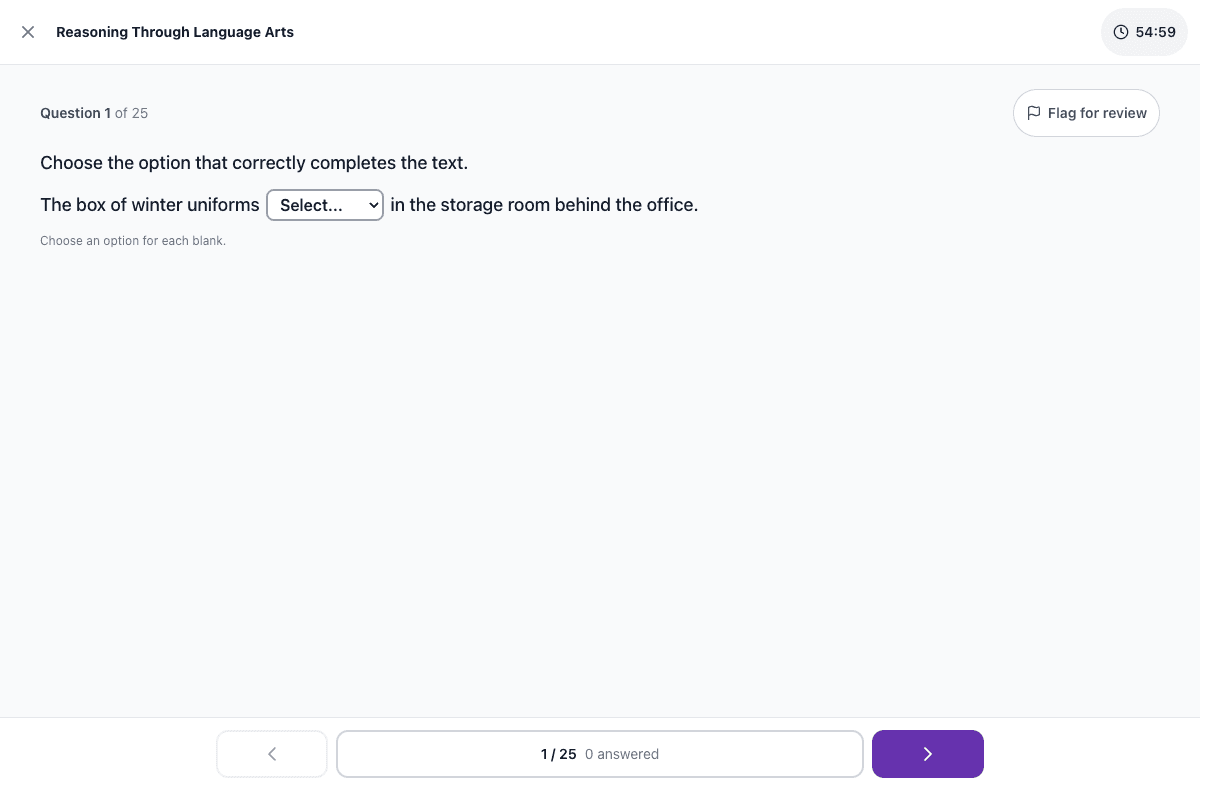
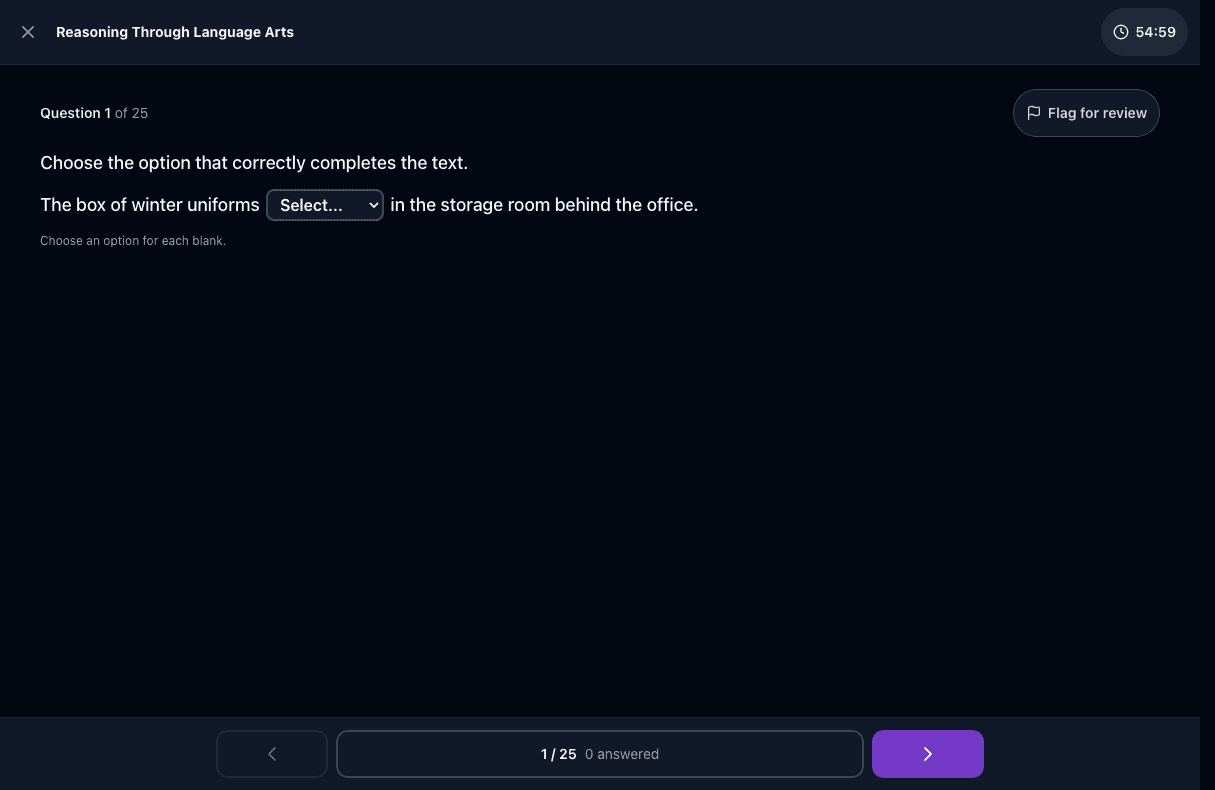
Test on desktop
The GED exam at a glance
The GED is four separate subject tests: Reasoning Through Language Arts (150 minutes, including a 45-minute essay), Mathematical Reasoning (115 minutes), Science (90 minutes) and Social Studies (70 minutes), taken on a computer at a Pearson VUE test center or online with a proctor. Each subject is scored 100 to 200, and 145 passes (165 is College Ready, 175 College Ready plus Credit). The fee is set per subject and varies by state.
TigerTest has two full-length GED practice tests covering all four subjects, with a percent score per subject and six skill drills that teach the basics first. All of it is free with no account required; the essay is not modeled.
- Subjects
- RLA, Mathematical Reasoning, Science, Social Studies (taken separately)
- Time
- 150, 115, 90 and 70 minutes; RLA includes a 45-minute essay
- Passing score
- 145 on a 100 to 200 scale, per subject
- Calculator
- On-screen TI-30XS on Math (all but 5 questions), Science and Social Studies
- Fee
- Per subject; varies by state
- Given by
- GED Testing Service, at Pearson VUE test centers or online proctored
Updated by the TigerTest team. Practice questions follow the assessment targets in the GED Testing Service Assessment Guide for Educators (October 2020 edition). Exam rules change, so confirm current details with GED Testing Service Assessment Guide for Educators.
How It Works
Skill Drills on Your Phone
Six drills, one per subject area. The reading, language and math drills open with the basics: a rule card and a couple of one-line questions on fractions, solving for x, commas or finding the main idea before the test-level questions. One tap to check, an explanation right away, and every miss comes back until you have mastered it.
Full Test on a Computer
Four timed subject sections with a break between them, a countdown clock, flag for review, a calculator on Math and Science, and the fill-in, dropdown and choose-two question types the real GED uses. Finish with a percent score per subject and a plan for what to drill next.
Built on the GED Subject Areas
Each practice test follows the assessment targets in the GED Testing Service Assessment Guide for Educators (October 2020 edition), and the drills are split the same way, so your results show which subject is holding you back. The essay (RLA extended response) is not modeled.

Teach a GED Class?
Adult education teachers can assign it to a class for free: post one link, students join with just their name, and you see who practiced, their test scores and the topics your class misses most.
Make a class at tigertest.io/teachHow to Pass the GED
1. Take it one subject at a time
The GED is four separate tests, and you can book them on different days. Most people pass Social Studies and Science first and save Math for last, because Math takes the most study. Pick the subject you feel best about, get it done, and build from there.
2. Learn the basics before the test questions
If it has been a while since school, start with the basics inside each drill. They teach one rule at a time, fractions, percents, solving for x, commas, main idea, with an example and two quick questions, so you are not guessing at test-level problems you were never shown how to do.
3. Read the passage, then the question
Most Science and Social Studies questions can be answered from the reading, table or chart in front of you. The answer is usually in the text; your job is to find it and avoid the choice that sounds right but is not supported. Practice that habit and those two subjects get much easier.
4. Take a full practice test before you book
Sit Practice Test 1 with the timer on to see where you stand, drill your weakest subject for a week or two, then take Practice Test 2. Its questions never appear in the drills, so it is an honest readiness check. When you are at 65 percent or better in a subject, schedule that test.
GED Frequently Asked Questions
What is on the GED test?
Four subject tests, each taken and scored separately: Reasoning Through Language Arts (150 minutes, including a 45-minute essay), Mathematical Reasoning (115 minutes), Science (90 minutes) and Social Studies (70 minutes). You can take them one at a time on different days. The TigerTest practice test covers the same four subjects with shorter timed sections, and a full practice test runs about 3 hours 20 minutes with breaks.
What score do you need to pass the GED?
Each subject is scored from 100 to 200, and 145 passes. A score of 165 or higher is GED College Ready, and 175 or higher is College Ready plus Credit, which some colleges accept for course credit. TigerTest reports percent correct per subject rather than the 100 to 200 scale, because the real cutoff is not a fixed percent. Aim for a comfortable margin, 65 percent or better, before you book.
Can I use a calculator on the GED?
Yes, on Mathematical Reasoning (all but the first five questions), Science and Social Studies. The real test gives you an on-screen TI-30XS scientific calculator, and you can bring your own TI-30XS to a test center. The TigerTest practice test has a calculator one tap away on every Math and Science question.
Is the essay included?
No. The Reasoning Through Language Arts test on the real GED includes an extended response, a 45-minute essay that analyzes two passages. TigerTest does not model the essay. Everything else in RLA is covered: reading comprehension and language and editing questions, including the dropdown and choose-two formats the real test uses.
What if I am taking the HiSET instead?
The HiSET covers the same four subject areas with reading and writing as separate tests, so the same practice helps. The question styles differ a little: the HiSET is multiple choice plus an essay, while the GED also uses fill-in, dropdown and choose-two items. TigerTest is modeled on the GED.
How do I prepare for the GED on my own?
Start with the four skill drills that teach the basics: each one opens with short rule cards and one-line questions before the test-level items, so a fraction or a comma rule is taught before it is tested. Ten minutes a night on your phone is enough. Take Practice Test 1 for a baseline, drill your weakest subject, then take Practice Test 2, which is held out of the drills, to see if you are ready.
Is the TigerTest GED practice test free?
Yes, all of it: both full practice tests, all six drills, the basics lessons and every explanation, with no account required. An account saves your progress across devices.
I teach a GED or adult education class. Can my students use TigerTest?
Yes, for free. Make a class at tigertest.io/teach, post one link, and students join with just their name. You see who practiced, their test scores and the topics your class misses most.
Related practice tests
Every test on TigerTest is free and needs no account to start.
- SAT Practice TestDigital SAT · Reading and Writing, Math
- ACT Practice TestEnhanced ACT · English, Math, Reading, Science
- TEAS Practice TestNursing & allied health admissions
- HESI A2 Practice TestNursing school admissions
- ASVAB Practice TestMilitary aptitude practice
- ACCUPLACER Practice TestCollege placement
Ready to Pass the GED?
Free. No account required. Two full-length practice tests, six drills and the basics, all four subjects.
Start practicing