
Free UPTET Paper 1 Mock Test
200 original questions on CDP, Hindi, English, Maths and EVS, content and pedagogy. Tuned for mobile. No account needed.
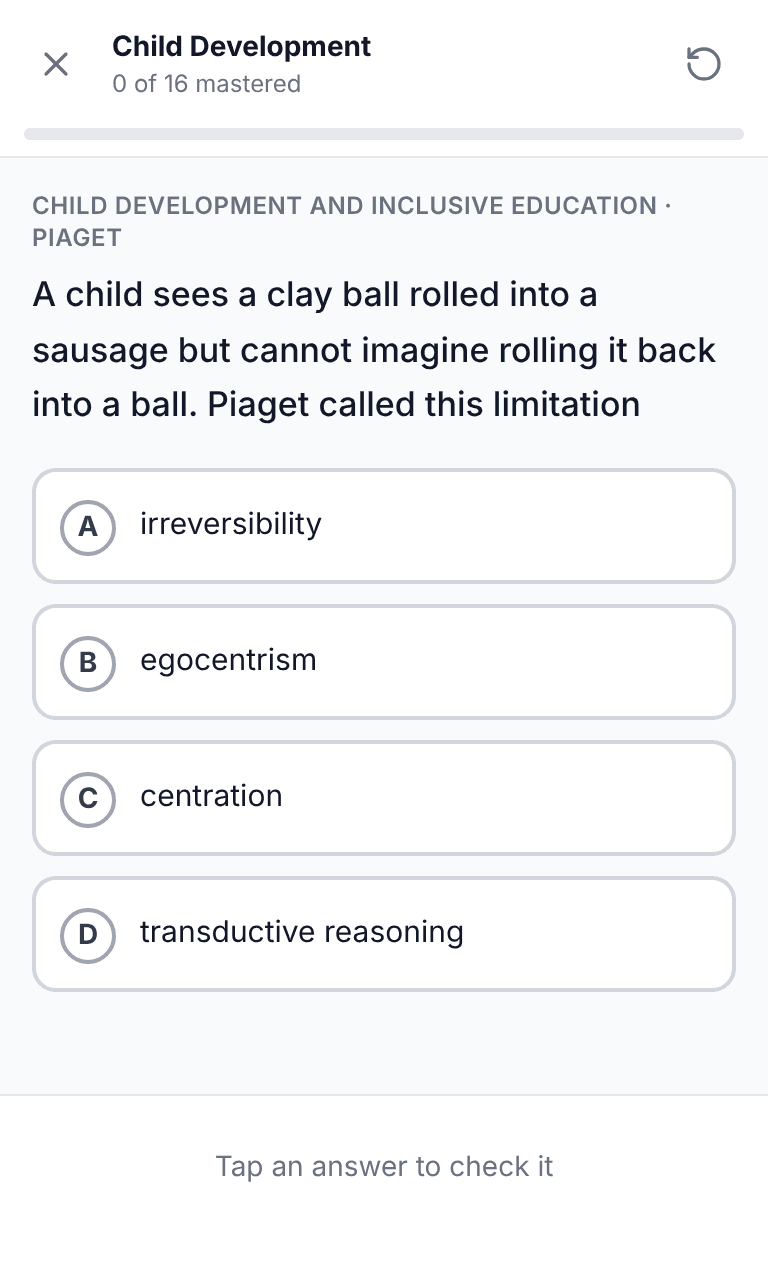
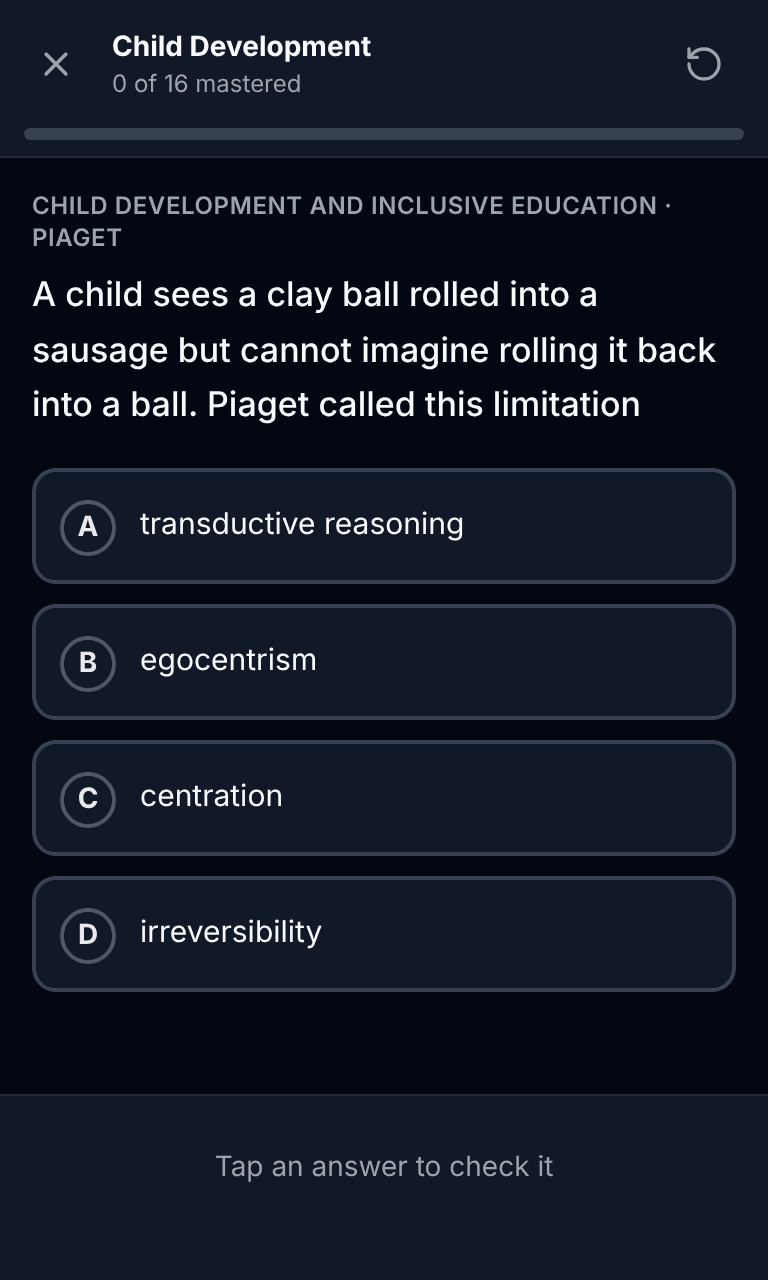
Train on mobile
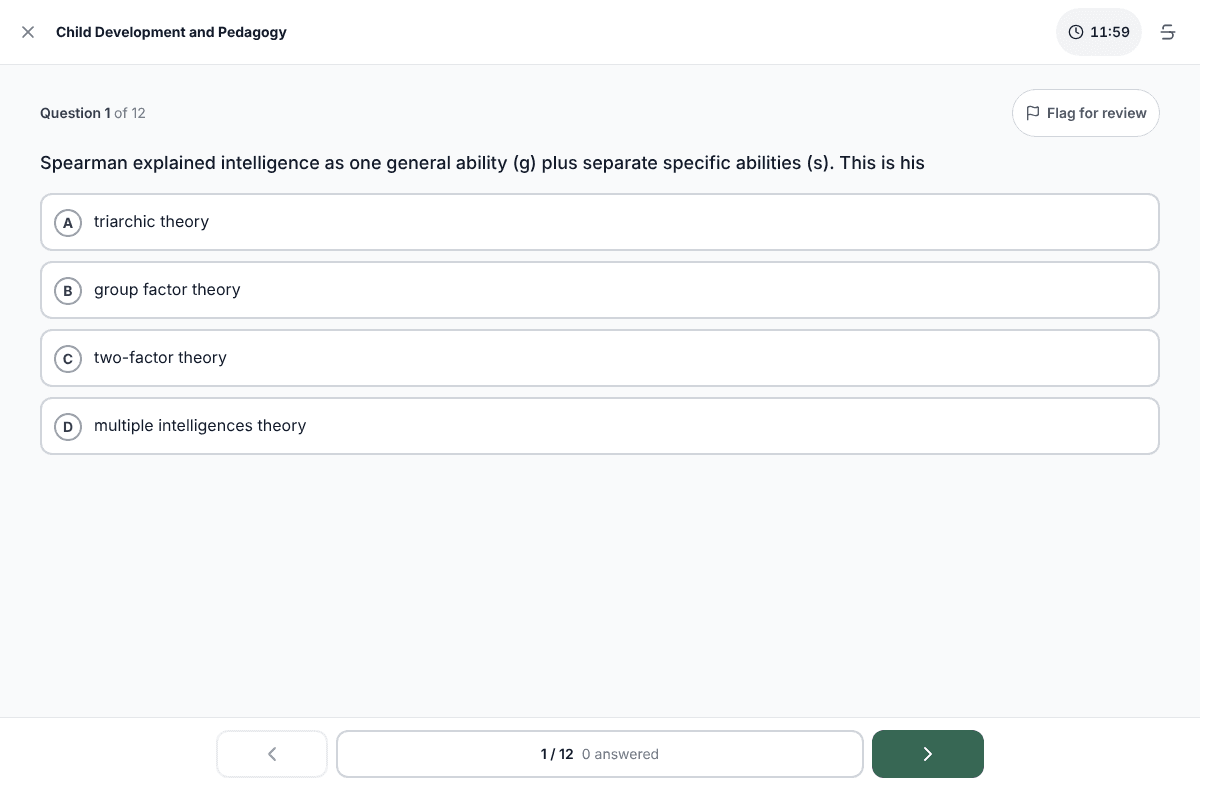
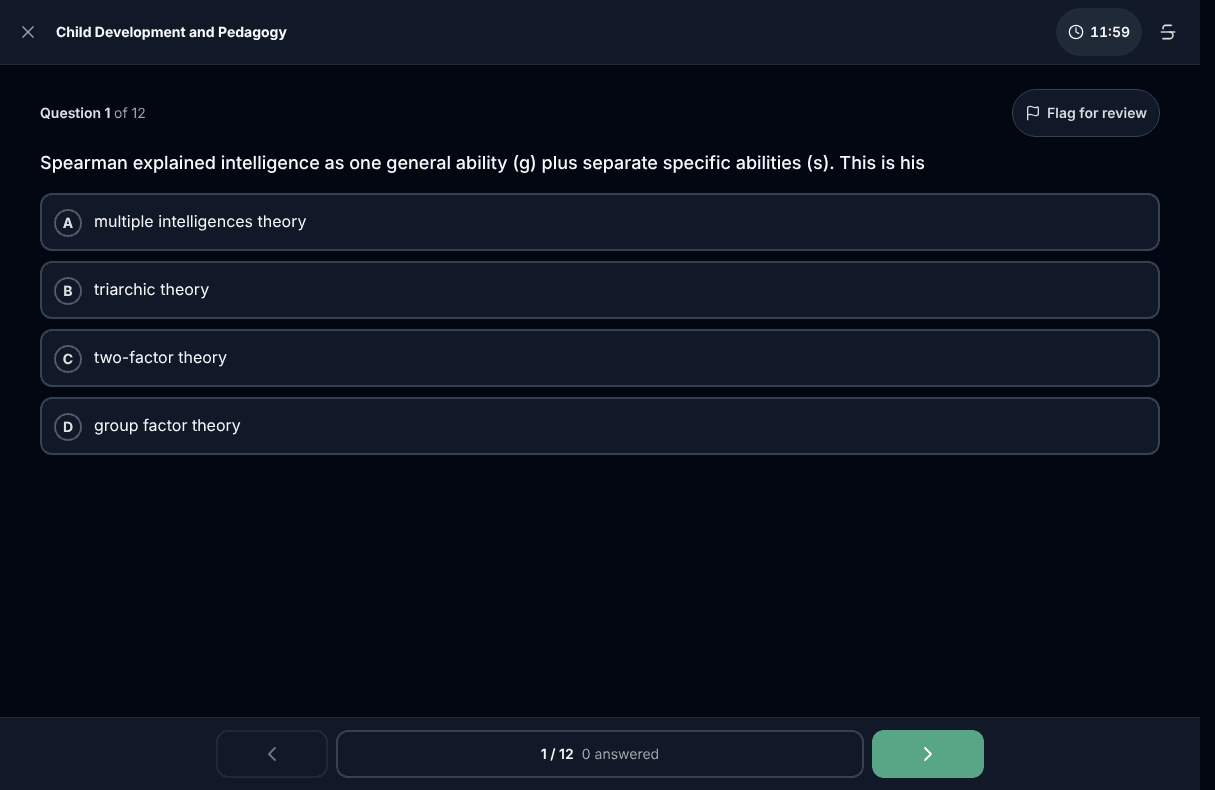
Test on desktop
The UPTET exam at a glance
UPTET Paper 1 is the Uttar Pradesh Teacher Eligibility Test for teachers of Classes 1 to 5, conducted since 2026 by the Uttar Pradesh Education Service Selection Commission (UPESSC). It has 150 one-mark multiple-choice questions in 2 hours 30 minutes, in five sections of 30: Child Development and Pedagogy, Language I (Hindi), Language II (English, Urdu or Sanskrit), Mathematics and Environmental Studies. There is no negative marking. The qualifying mark is 90 of 150 (60 percent) for general candidates and 82 of 150 (55 percent) for SC, ST, OBC, EWS, dependants of freedom fighters, ex-servicemen and candidates with disabilities. The 2026 test (Advertisement No. 01/UPTET/2026, published 20 March 2026) was held on OMR sheets on 2 to 4 July 2026, with results on 26 August 2026.
Tigertest has 200 UPTET practice questions with explanations, all free with no account required.
- Questions
- 150 MCQs, 1 mark each
- Time
- 2 hours 30 minutes
- Sections
- CDP, Hindi, Language II, Maths, EVS (30 each)
- Language II
- English, Urdu or Sanskrit
- Negative marking
- None
- Qualifying mark
- 90/150 (60%) general, 82/150 (55%) reserved
- Latest test
- 2 to 4 July 2026 (OMR); result 26 August 2026
- Certificate
- Valid for life (UP government order, June 2021)
- Conducted by
- UP Education Service Selection Commission (UPESSC)
Updated by the Tigertest team. Practice questions follow the UPESSC UPTET 2026 information booklet (Adv. No. 01/UPTET/2026) and the August 2026 result reports, checked November 2026. Exam rules change, so confirm current details with UPESSC.
How It Works
Nine Drills
Child development, learning and pedagogy, Hindi, Hindi pedagogy, English, maths, maths pedagogy, EVS and EVS pedagogy. Questions you miss come back until you have mastered them, and every answer has an explanation.
Timed Mock Tests
Two mocks of 60 questions in 60 minutes, one minute per question like the real paper: 12 each from CDP, Hindi, English, Maths and EVS. Practice Test 2 is held out of the drills, so it measures readiness rather than memory.
Built on the UPTET Paper 1 Syllabus
Paper 1 has five sections of 30 questions. Tigertest models all five at 12 questions each, with the same mix of content and pedagogy. Language II is modelled as English; Urdu and Sanskrit are not included.
Help Make Tigertest Better
Have an idea, a topic you'd like covered, or a question that could be clearer? We read every message and use it to improve every test.
Share FeedbackHow to Qualify UPTET Paper 1
1. Treat pedagogy as half the paper
Pedagogy runs through every section. The answer UPTET wants is usually the child-centred one: start from what children know, learn by doing, treat errors as clues, include every child and assess to improve teaching rather than to rank.
2. Score in Hindi grammar
Language I is Hindi for every candidate. Sandhi, samas, alankar, varn and uchcharan sthan, paryayvachi and vilom come up every year, alongside an unseen passage and Hindi teaching methods. Practise them until they are quick.
3. Know the theorists and the laws
Child Development and Pedagogy leans on Piaget, Vygotsky, Erikson, Kohlberg, Thorndike, Skinner and Bandura, inclusive education, the RTE Act 2009 and NEP 2020. Learn what each means for a primary classroom, not just the names.
4. Answer every question
There is no negative marking, so never leave a bubble empty. Use the drills to find your weakest section and keep working on it until both mock tests are comfortably above 60 percent.
UPTET Paper 1 Frequently Asked Questions
What is the exam pattern of UPTET Paper 1?
UPTET Paper 1 is for teachers of Classes 1 to 5 in Uttar Pradesh. It has 150 multiple-choice questions of one mark each in 2 hours 30 minutes, in five sections of 30: Child Development and Pedagogy, Language I (Hindi), Language II (English, Urdu or Sanskrit), Mathematics and Environmental Studies. The 2026 test was held on OMR sheets on 2 to 4 July 2026 by the Uttar Pradesh Education Service Selection Commission (UPESSC).
What are the qualifying marks for UPTET?
The UPTET 2026 information booklet sets the qualifying mark at 90 of 150 (60 percent) for general candidates and 82 of 150 (55 percent) for SC, ST, OBC, EWS, dependants of freedom fighters, ex-servicemen and candidates with disabilities. Check the booklet for your cycle. Passing UPTET makes you eligible to apply for primary teacher posts; it is not a job offer by itself.
Is there negative marking in UPTET?
No. The 2026 information booklet says there is no negative marking, so answer every question. Tigertest scores the same way: every question is worth one mark and a wrong answer simply earns zero.
What does this UPTET mock test cover?
Each mock has 60 questions in 60 minutes, the real paper's pace of one minute per question: 12 each from Child Development and Pedagogy, Hindi, English, Mathematics and EVS, split between content and pedagogy. Hindi questions are written in Hindi with explanations in English. Language II is modelled as English; if you take Urdu or Sanskrit, prepare it from that language's syllabus. The questions are original and written to the UPTET syllabus, not copied from past papers.
Is the Tigertest UPTET practice test free?
Yes. Both mock tests and all nine drills are free, with no account required. Create a free account if you want your progress saved across your phone and computer.
I teach a UPTET or D.El.Ed coaching class. Can my students use Tigertest?
Yes, for free. Make a class at tigertest.io/teach, post one link, and students join with just their name. You see who practiced, their test scores and the topics your class misses most.
Tigertest is not affiliated with or endorsed by UPESSC or the Government of Uttar Pradesh.
Related practice tests
Every test on Tigertest is free and needs no account to start.
Ready for UPTET Paper 1?
Free to start. No account required. 200 questions across CDP, Hindi, English, Maths and EVS.
Start practicing