
Free CPR Practice Test 2026
200 questions on adult, child and infant CPR, AED use, choking and first aid. Tuned for mobile. No account needed.
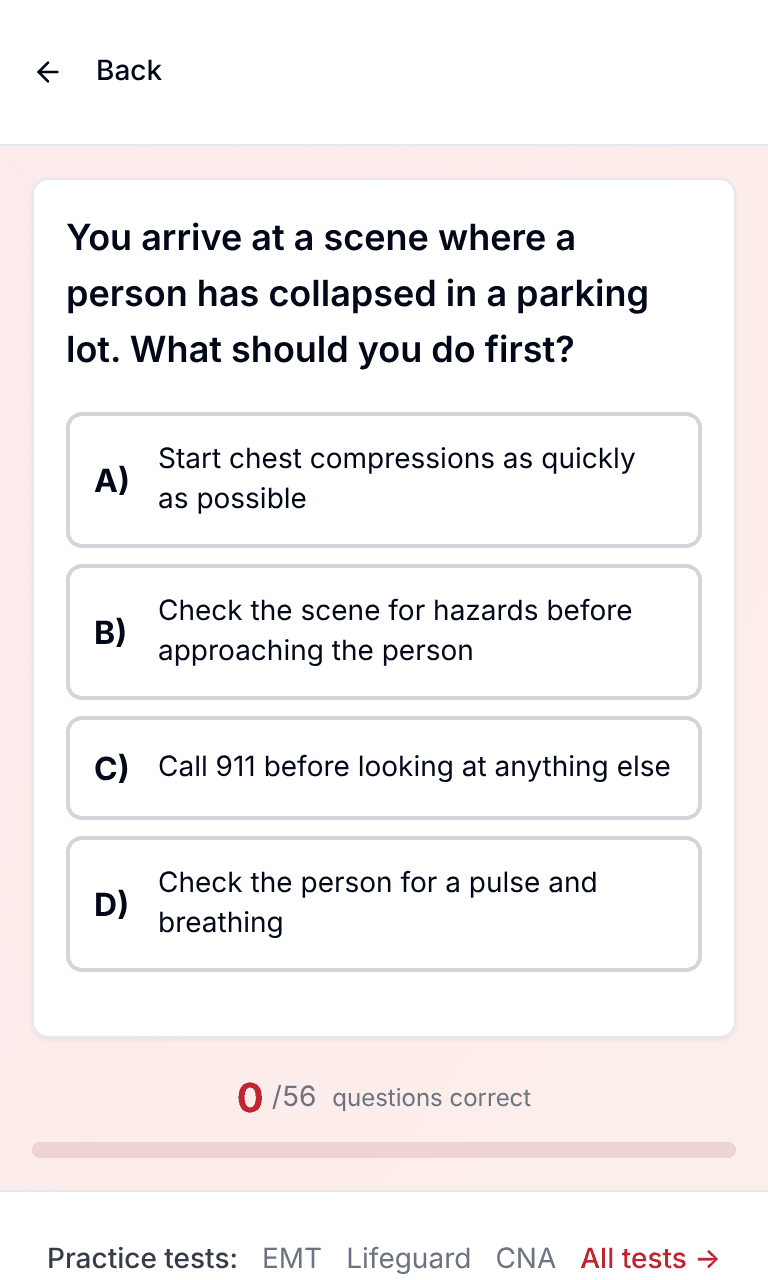
Train on mobile
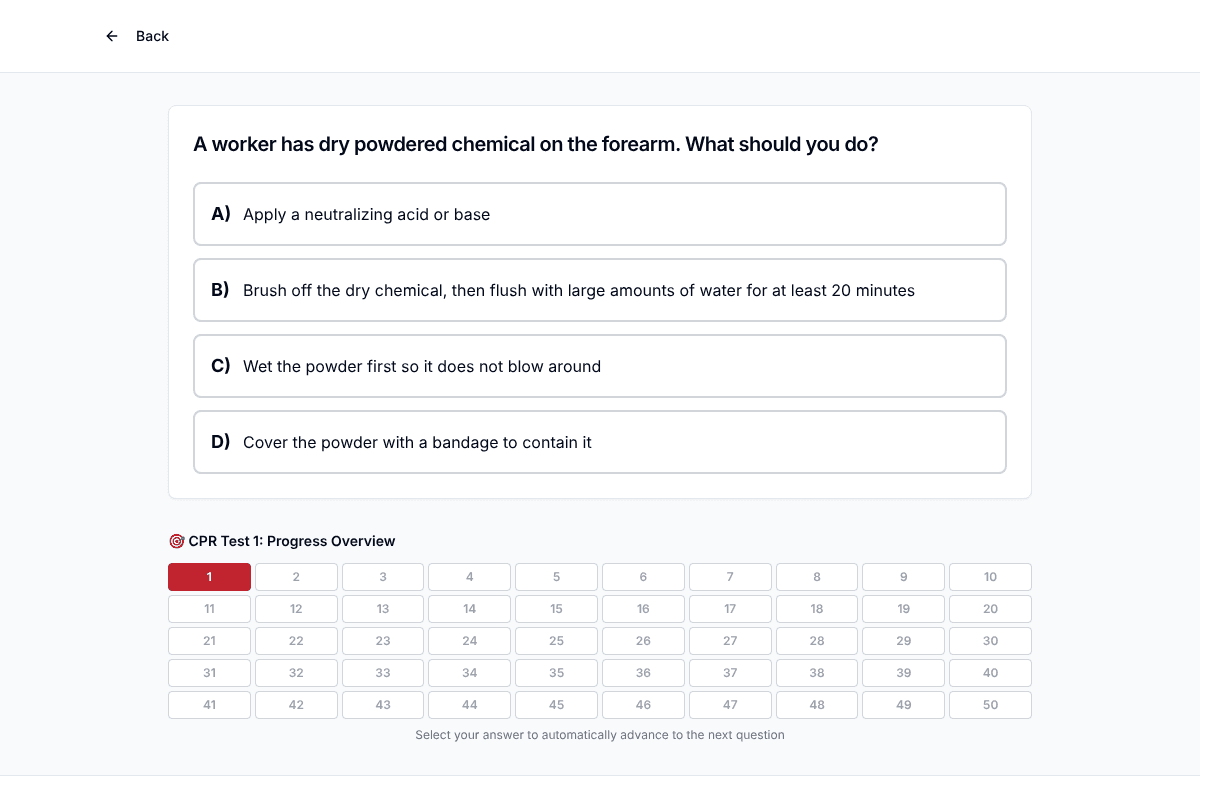
Test on desktop
How It Works
Training by Topic
Four sets: basics and choking, adult CPR and AED, child and infant CPR, and first aid. Questions you miss come back until you have mastered them.
Practice Tests
Four 50-question tests that mix every topic the way a written exam does, with an explanation on every answer that says why the right choice is right and the common wrong pick is wrong.
Built on the 2020 Resuscitation Guidelines
Every provider's CPR, AED and first aid course is built on the same guidelines, so the written exams test the same numbers and steps: compression rate and depth, ratios for one and two rescuers, AED pad placement, choking relief by age, and the first aid basics. The practice tests here weight adult CPR and first aid most heavily because that is where exams spend their questions.
We Just Launched!
The CPR practice test is brand new. If a question looks wrong or your course teaches a step differently, tell us.
Send Us FeedbackHow to Pass the CPR Written Exam
1. Memorize the numbers
100 to 120 compressions a minute. At least 2 inches deep for adults, about 2 inches for children and 1.5 inches for infants. 30 to 2 for a single rescuer at every age and 15 to 2 for two rescuers on a child or infant. Pauses under 10 seconds, switch compressors every 2 minutes. Half the exam is these figures.
2. Know what changes by age
Infants get two fingers or two thumbs, a brachial pulse check, back slaps and chest thrusts for choking, and a neutral head position. Children get one or two hands and abdominal thrusts. A lone rescuer calls first for an adult but gives 2 minutes of CPR first for an unwitnessed child or infant collapse with no phone. Exams love these contrasts.
3. Learn the AED sequence cold
Turn it on, bare and dry the chest, attach pads upper right and lower left, clear the victim for analysis, shock if advised, and go straight back to compressions for 2 minutes. Know the special cases: water, hair, medication patches, implanted devices, pediatric pads, and oxygen nearby.
4. Drill the first aid recognition items
FAST for stroke, chewed aspirin for a heart attack with no allergy or bleeding, epinephrine in the outer thigh for anaphylaxis, direct pressure then a tourniquet for severe bleeding, cool water not ice for burns, and nothing by mouth for anyone who is not fully alert. TigerTest tracks your accuracy by topic so you can retake the set you miss most until you clear 90 percent.
CPR Exam Frequently Asked Questions
What is on the CPR written exam?
Most written exams cover scene safety and the Chain of Survival, adult CPR and AED use, child and infant CPR, choking relief, and basic first aid such as bleeding control, shock, burns, stroke and heart attack recognition, seizures, and heat and cold emergencies. Healthcare BLS exams go deeper on team CPR, bag-mask ventilation and pulse checks; lay rescuer courses spend more time on first aid.
What score do I need to pass?
Most training providers require 84 percent or higher on the written portion, which is 21 of 25 questions on a typical 25-question exam. Some first aid only courses use a lower cutoff. TigerTest marks a pass at 84 percent so you practice against the stricter standard.
Does passing a written test get me certified?
No. Every recognized CPR certification also requires a hands-on skills session where an instructor watches you perform compressions, breaths and AED use on a manikin. The written test is one part of the course. TigerTest prepares you for the written part only and is not affiliated with any training provider.
How long is a CPR certification valid?
Certification cards from the major providers are typically valid for two years. Workplaces and licensing boards may require renewal sooner, so check the rules that apply to your job or program.
Is this practice test for healthcare BLS or for lay rescuer CPR?
Both. The bank follows the 2020 resuscitation guidelines that every provider's course is built on. Lay rescuer items cover hands-only CPR, AED steps, choking and first aid; healthcare-level items cover pulse checks, two-rescuer ratios, advanced airway ventilation rates and team roles. The training sets let you focus on whichever you need.
Related practice tests
Every test on TigerTest is free and needs no account to start.