
Free Victorian Selective Entry Practice
Mathematics, Quantitative Reasoning, Reading and Verbal Reasoning in two full timed practice tests, plus four drills that teach the basics first. Everything is free, no account needed.
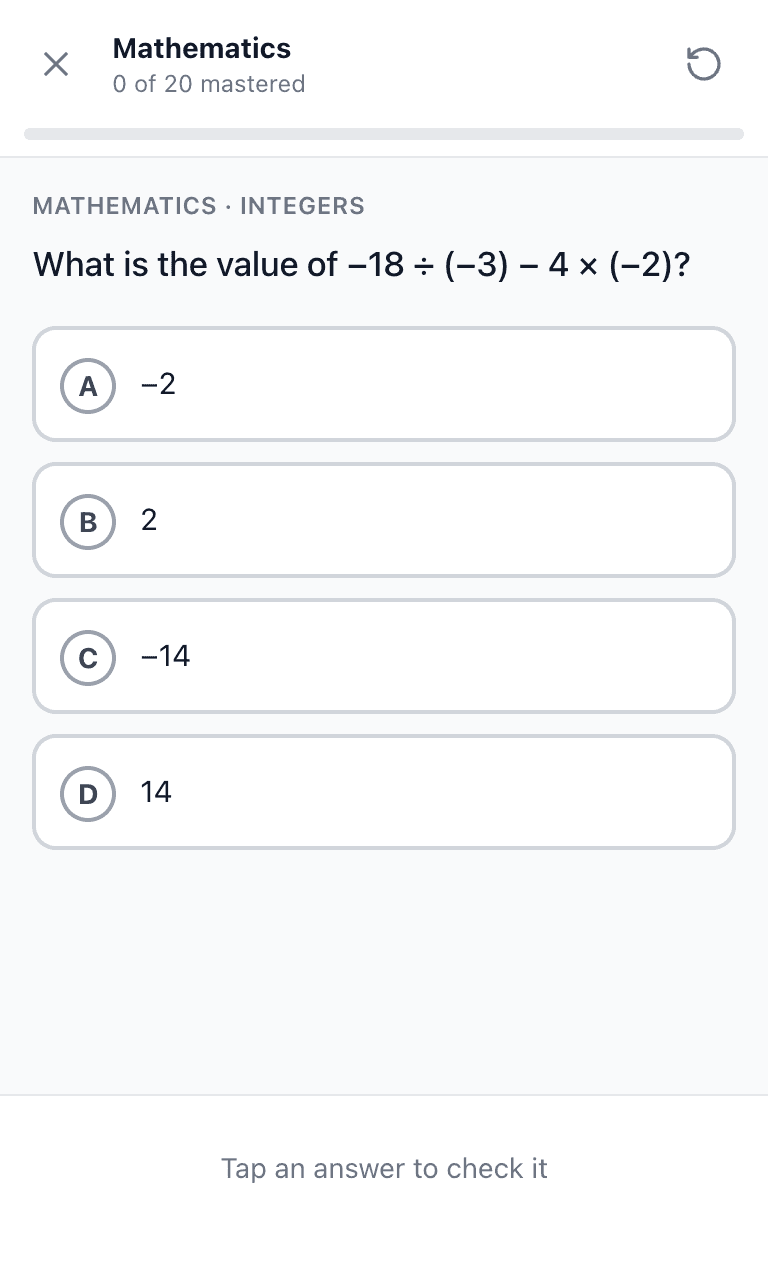
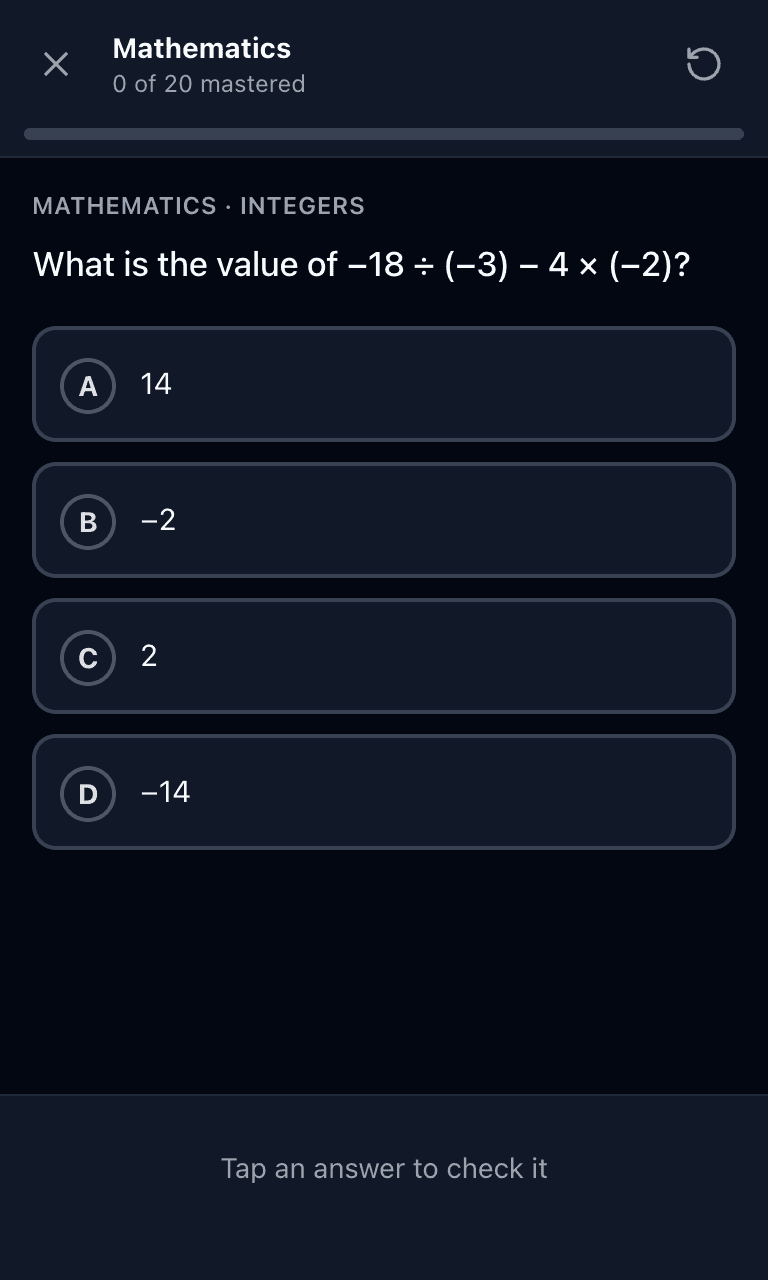
Train on mobile
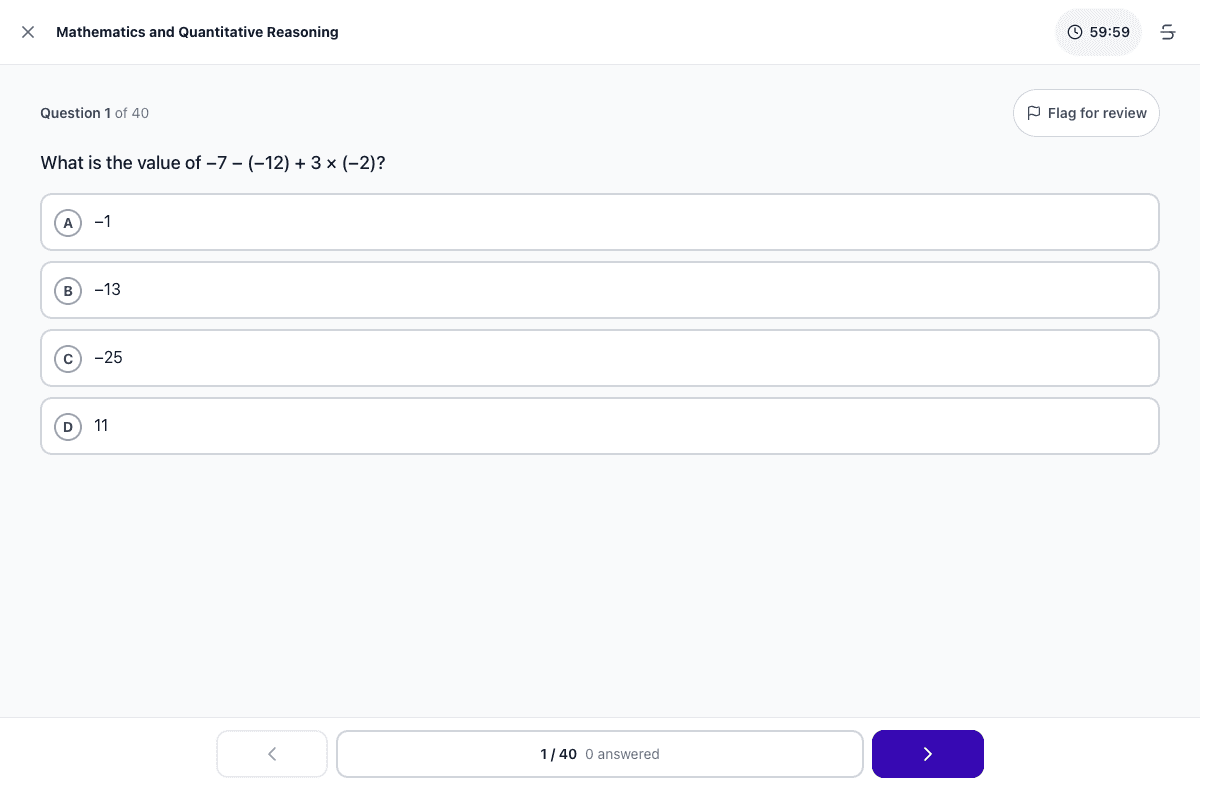
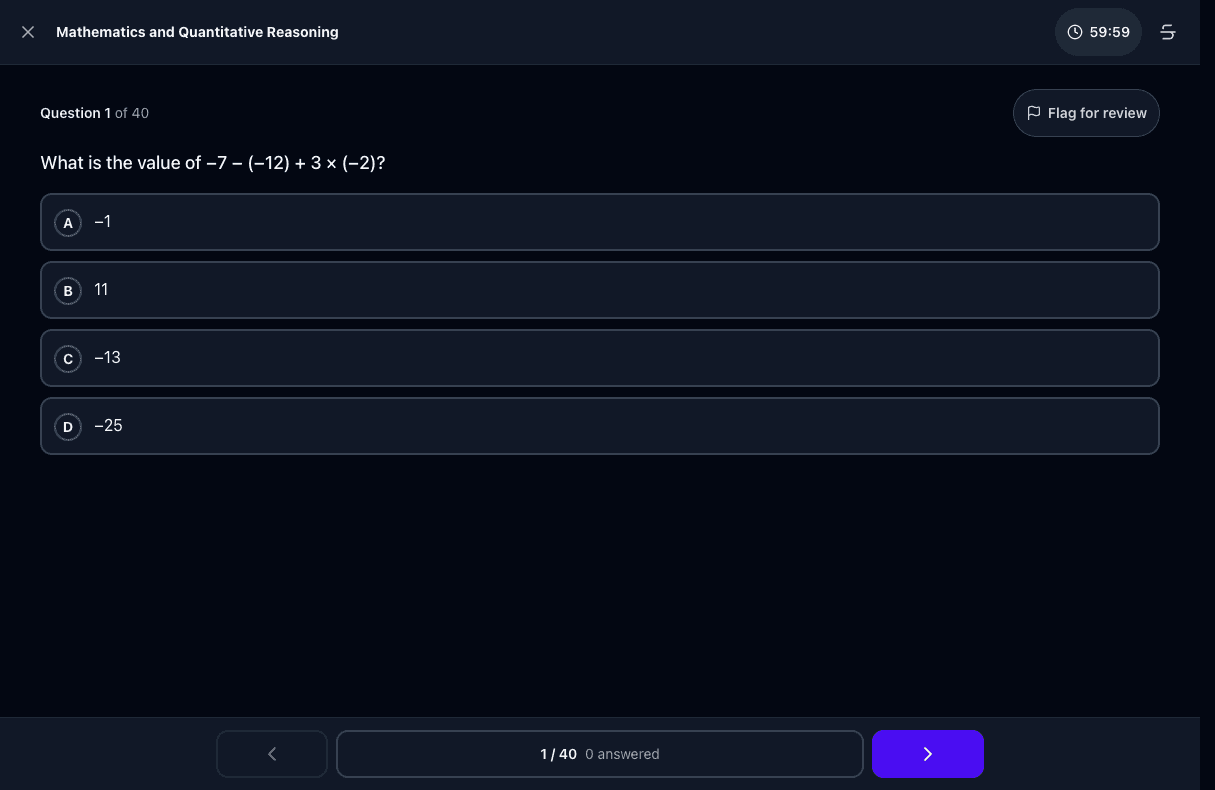
Test on desktop
The Vic Selective exam at a glance
The Victorian Selective Entry High Schools exam is the entry test for Year 9 places at Nossal High School, Suzanne Cory High School, The Mac.Robertson Girls' High School and Melbourne High School, sat on paper in June of Year 8. ACER runs applications, the exam and offers for the Victorian Department of Education. The exam has Mathematics and Quantitative Reasoning (60 minutes, multiple choice), a 20-minute break, Reading and Verbal Reasoning (55 minutes, multiple choice) and Writing (two tasks in 40 minutes). Calculators are not allowed and no section goes beyond the Year 8 curriculum. There is no pass mark: about 85 percent of the roughly 1,000 places are offered in rank order of exam performance.
Tigertest has two full practice tests covering Mathematics and Quantitative Reasoning and Reading and Verbal Reasoning at the real times, 40 questions per section, a percent score per section, and four drills that teach the basics first. All of it is free with no account required; Writing is not modelled.
- Who takes it
- Year 8 students in Victoria applying for Year 9 at a selective entry high school
- Mathematics and Quantitative Reasoning
- 60 minutes, multiple choice, no calculator
- Reading and Verbal Reasoning
- 55 minutes, multiple choice
- Writing
- 2 tasks, 40 minutes
- Content level
- Nothing beyond the Year 8 curriculum
- Places
- About 1,000 across four schools; 85% standard merit, up to 10% equity, up to 5% principal discretion
- Passing score
- No pass mark; places offered in rank order
- Given by
- ACER for the Victorian Department of Education, on paper at exam centres in June
Updated by the Tigertest team. Practice questions follow the Victorian Government's selective entry high schools page and ACER's published exam format. Exam rules change, so confirm current details with Victorian Government: selective entry high schools.
How It Works
Drills on a Phone or Tablet
Four drills: mathematics, quantitative reasoning, reading and verbal reasoning. Each opens with the basics, a short lesson and two quick questions on ideas like negative numbers, ratio or finding the evidence, before the exam-level questions. One tap to check, an explanation straight away, and every miss comes back until it is mastered.
Full Test on a Computer
Two timed sections with the real exam's break between them, a countdown clock, flag for review, reading texts beside the questions, and no calculator. Finish with a percent score per section and a list of what to drill next.
Built on the Real Exam Format
Each practice test follows the published structure of the Victorian Selective Entry exam: the same two multiple-choice sections in the same order, with the same times, and nothing beyond the Year 8 curriculum. The drills are split by strand, so results show which part is holding a student back. Writing is not included.

Run a Selective Entry Class?
Year 7 and 8 teachers and tutors can set it for a class for free: post one link, students join with just their name, and you see who practised, their section scores and the questions your class misses most.
Make a class at tigertest.io/teachHow to Prepare for the Selective Entry Exam
1. Practise pace, not just accuracy
The exam is built so that not everyone finishes. Strong students lose marks by spending five minutes on one puzzle. Practise moving on, flagging the hard one and coming back with the time left at the end.
2. Learn the reasoning patterns
Quantitative and verbal reasoning questions look new at first but follow a few patterns: growing gaps in a series, working a number machine backwards, the link in an analogy, what must be true. Once a student can name the pattern, these become reliable marks.
3. Do the maths without a calculator
Calculators are not allowed, so fractions, percentages, negative numbers and order of operations need to be quick and sure. A few minutes of mental arithmetic most days pays off across the whole first section.
4. Sit a full practice test before exam day
Sit Practice Test 1 with the timer on to see where you stand, drill the weakest strand, then sit Practice Test 2. Its questions never appear in the drills, so it is an honest readiness check.
Selective Entry Exam Frequently Asked Questions
What is on the Victorian Selective Entry exam?
The exam is sat on paper in June of Year 8, in three parts: Mathematics and Quantitative Reasoning (60 minutes, multiple choice), a 20-minute break, Reading and Verbal Reasoning (55 minutes, multiple choice), a short break, and Writing (two tasks in 40 minutes). Calculators are not allowed, and no section needs knowledge beyond the Year 8 curriculum. The Tigertest practice test covers both multiple-choice sections at the real times.
How many questions are on the exam?
The number of questions is not published, and the exam is designed so that not everyone finishes. Each Tigertest practice test has 40 questions per section, 20 for each strand, which keeps the pace realistic: about a minute and a half per question in Mathematics and Quantitative Reasoning and a little under that in Reading and Verbal Reasoning.
What score do you need to get into a selective entry school?
There is no pass mark. Standard merit places, about 85 percent of the roughly 1,000 Year 9 places across the four schools, are offered in rank order of exam performance, and the score needed changes from year to year. Tigertest reports percent correct per section and an overall average, so treat it as a readiness check: aim for 75 percent or better in both sections.
What are Quantitative Reasoning and Verbal Reasoning?
They test thinking rather than school content. Quantitative Reasoning is thinking with numbers and patterns: number series, number machines, rules in a table, balances, ages and counting puzzles. Verbal Reasoning is thinking with words and logic: analogies, word meanings and opposites, odd one out, letter series and codes, and short deductions about what must be true. Tigertest's versions are all text; the real exam may also include shape puzzles.
Is the Writing section included?
No. The two writing tasks are marked by people, which a practice test cannot score fairly. Practise them separately with timed pieces of about 20 minutes each, and ask a teacher or tutor to mark them for ideas, structure, and precise, accurate language.
How should my child prepare for the selective entry exam?
Start with the drills on a phone: each opens with short lessons on the basics (negative numbers, fractions, ratio, area, main idea, finding the evidence, word meanings) before the exam-level questions, and every miss comes back until it is right. Sit Practice Test 1 with the timer on, drill the weakest strand for a few weeks, then sit Practice Test 2, which is held out of the drills so it gives an honest score.
Is the Tigertest selective entry practice free?
Yes, all of it: both full practice tests, all four drills, the basics lessons and every explanation, with no account required. An account saves progress across devices.
I teach a selective entry coaching class. Can my students use Tigertest?
Yes, for free. Make a class at tigertest.io/teach, post one link, and students join with just their name. You see who practiced, their test scores and the topics your class misses most.
Related practice tests
Every test on Tigertest is free and needs no account to start.
- NAPLAN Year 7 Practice TestACARA · Year 7 Reading, Conventions, Numeracy
- NAPLAN Year 9 Practice TestACARA · Year 9 Reading, Conventions, Numeracy
- OC Test PracticeNSW Department of Education · Year 4 for Year 5 OC entry
- NSW Selective Test PracticeNSW Department of Education · Year 6 for Year 7 entry
- HSC Maths Standard 2 Practice TestNESA (NSW) · Year 12 HSC
Ready for Exam Day?
Free. No account required. Two full practice tests, four drills and the basics, from mathematics to verbal reasoning.
Start practicing